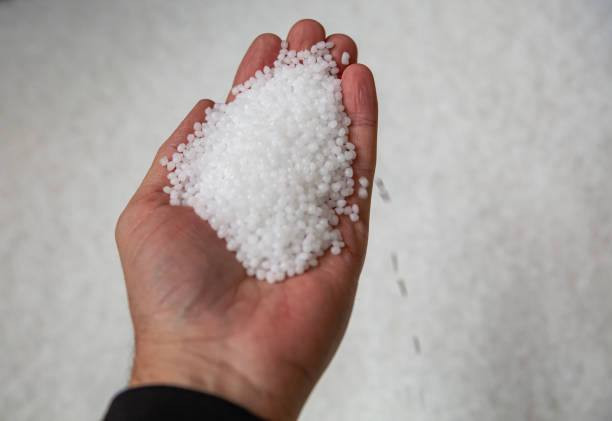
Differences between Polyethylene Grades: PE63, PE80, and PE100
Polyethylene (PE) is one of the most widely used polymers in pipe manufacturing and underground installations. Due to its light weight, high resistance to corrosion, and long service life, polyethylene pipes have become a suitable replacement for metal and concrete pipes in water supply, sewage, gas distribution, and industrial systems.
Meaning of PE Grades: PE63, PE80, and PE100
-
“PE” stands for Polyethylene.
-
The number (63, 80, 100) refers to the Minimum Required Strength (MRS) of the polymer at 20 °C after 50 years of service life.
Summary:
-
PE63 → MRS = 6.3 MPa
-
PE80 → MRS = 8.0 MPa
-
PE100 → MRS = 10.0 MPa
The higher the number, the stronger the polymer against internal pressure, long-term stress, and crack formation.
Structural and Molecular Differences
| Type |
Density (g/cm³) |
Molecular Structure |
Result |
| PE63 |
~0.930 |
More side branches |
Lower strength |
| PE80 |
~0.940 |
Fewer branches, more regular chains |
Medium strength, good flexibility |
| PE100 |
0.950–0.960 |
Highly regular and compact |
High strength, lighter weight, longer life |
Mechanical and Technical Properties
| Property |
PE63 |
PE80 |
PE100 |
| Compressive strength |
Low |
Medium |
Very high |
| Pipe weight (for same PN) |
High |
Lower |
Lowest |
| Flexibility |
High |
Medium |
Low |
| Crack resistance |
Low |
Good |
Excellent |
| Max operating temperature |
Up to 40 °C |
Up to 50 °C |
Up to 60 °C |
| Service life (approx.) |
25–30 years |
40–50 years |
50+ years |
Applications
PE63
PE80
PE100